Jack Plant in Elsmere Canyon
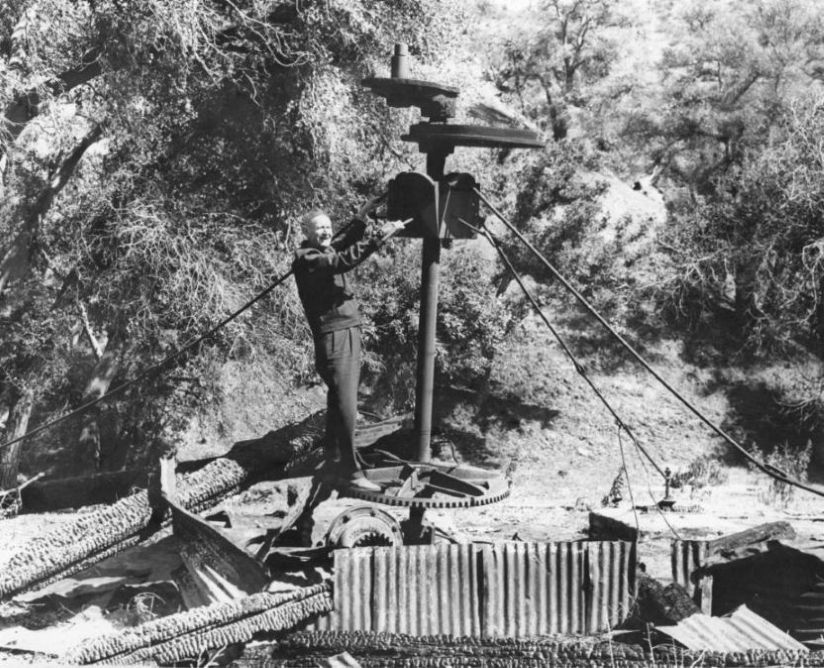
Here are the remains of a jack plant, and Arthur B. Perkins, in Elsmere Canyon. The two eccentrics are on top of a geared shaft. The gear that rotated the shaft is on the bottom of the shaft. The engine that provided the power to turn the gear is gone. The wooden parts are burnt. The sheet metal for and enclosure is gone or laying around. (Photo taken on March 14, 1964, by Richard Trueblood.) From the Lagasse Pico Canyon Collection - used by permission.
This jack plant was probably located in the first wide opening on the south side the canyon when you hike down the road (a little less than 1/2 mile). There are jacklines, or strong evidence of jacklines, on both ridges of the opening. The left (eastern) side was the location of wells Elsmere 5, Elsmere 9, and Elsmere 18 (see Oil Well Locations Page). On the right (western) ridge are five jackline supports and a jackline that comes down from the top of the canyon. At the top of the canyon looking down were Elsmere 15 and Elsmere 20 with Elsmere 10 nearby. Up the middle of the this opening was Elsmere 6. Elsmere 7 was located a couple of hundred feet to the west almost at the canyon bottom. Elsmere 2 was located on the other side of the creek less than 100 feet from where jack plant probably was. Elsmere 13 was located to the east of Elsmere 5. Elsmere 16 was located south of, and above, 13. Considering the small production of each well, Standard would have wanted to keep the number of jack plants (also called central power units) at a minimum to save on costs. I did not found any evidence that there was a second jack plant in the canyon, but there may have been.
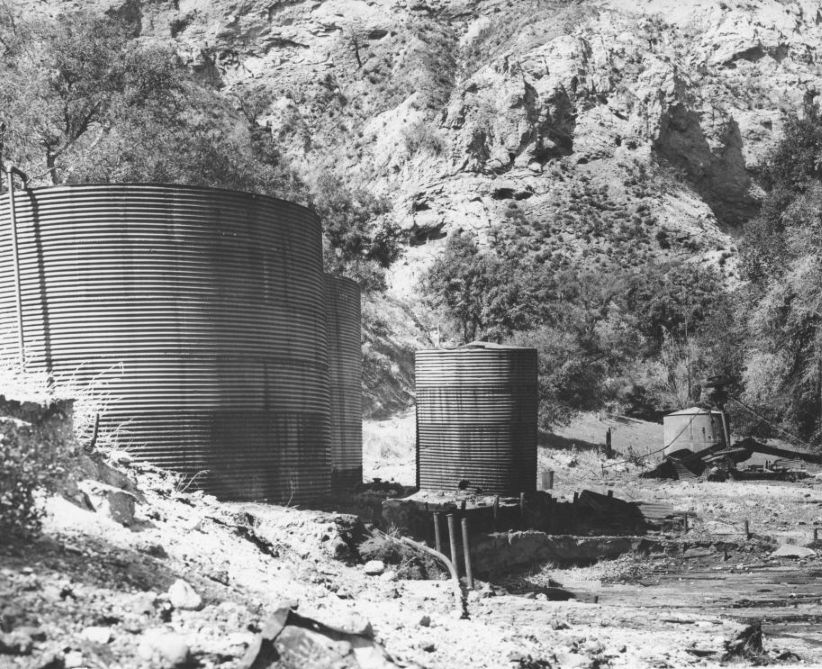
Tanks with the jack plant in the right background. (Photo taken on March 14, 1964, by Richard Trueblood.) From the Lagasse Pico Canyon Collection - used by permission.
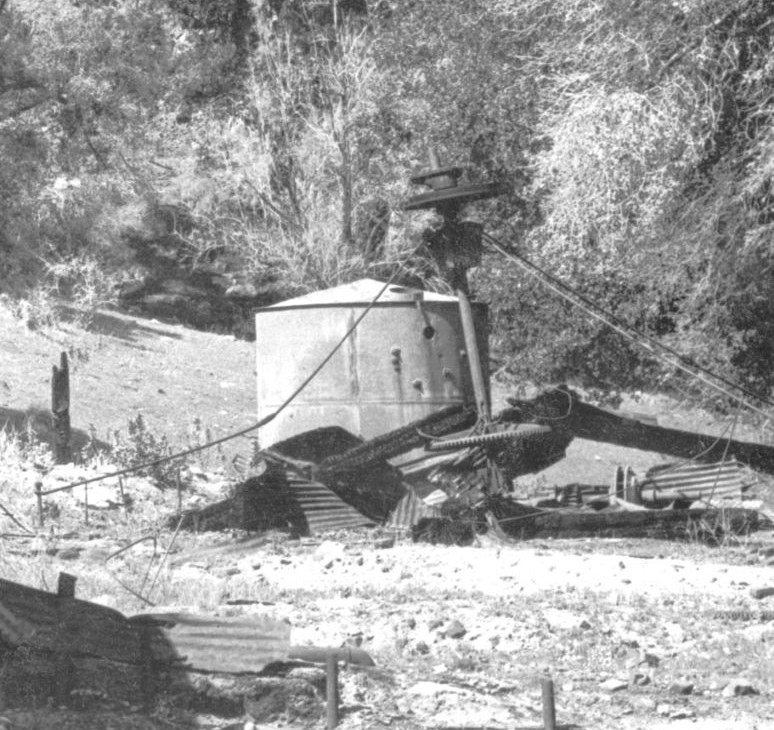
A close-up of the previous photo shows the jack plant shaft of the first photo (without Perkins).
What is a jack plant? Simply put, it's an apparatus that is able to pump multiple oil wells from a distance. The main device at the plant is a central power unit (also called an Allen power unit after the original patent holder or just a "power"). The Elsmere power unit rotated two eccentric wheels (wheels with the axle not in the center) at the top of a shaft with a gear on the bottom of the shaft rotated by another gear that was connected to an engine (usually by a belt). As the eccentric wheels rotated, they alternately pulled and released steel cables (called jacklines, shacklelines, jerk-lines, jerker lines, or transmission lines) attached to remote pump jacks at the wells. If necessary (when flexible cables were used as in this case), the remote pump would use a weight to provide for the return stroke, or downstroke, of the pump while the power would provide the upstroke. The downstroke could also be caused by the weight of the column of oil on the plunger of the pump and the weight of the sucker rods with maybe some assistance by weights. The jackline had to be kept as taut as possible. This setup could power pumps over a great distance. This power was probably originally powered by a steam engine and later by a gas engine.
In the early days of the oil industry, wells were pumped individually. This wasted both labor and power - each well requiring a man and some sort of power (usually steam engine). However, a jack plant could operate a group of wells with practically the same labor and power as if there was only one well. Whether a group of wells could use this method depended on many factors including location, topography, quantity of oil, type of oil, gas pressure, amount of sand, amount of water, depth of well, and many other factors. A jack plant would allow wells that would otherwise be abandoned due to low output to be pumped profitably for many years.
Prutzman (1904 - see sources) reported that "most of the wells in all parts of the Newhall Field are pumped by means of the jack" (p. 29). In 1934, Walling reported 7 wells still in operation in this area of the Elsmere oil field. However, he did not mention anything about jacklines. In 1940, Waldo Ford (UCLA thesis) mentions that 7 well pumps were being powered by jacklines. Oakeshott (1958) reported that in 1942, 6 wells were in operation.
Here is part of an 1985 Division of Oil, Gas, and Geothermal Resources (DOGGR) video showing a jackplant in action (mp4). The jackplant was located in the Santa Paula Oil Field in Ventura County, California. No doubt that it's not active anymore.
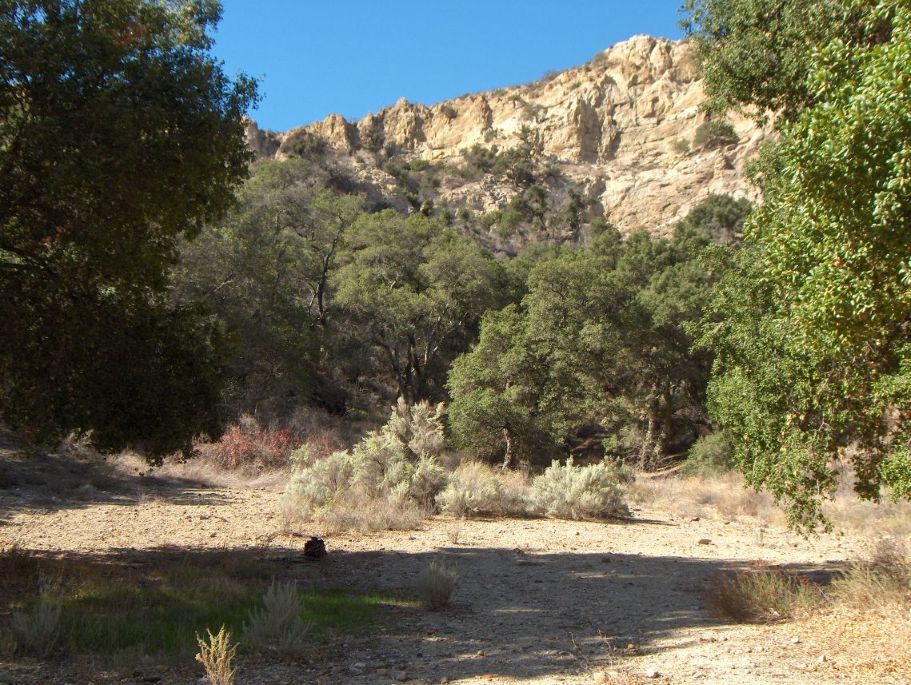
Here is the area where I think that the jack plant was looking southwest from the road. My black backpack is in the lower left shadow. The cliffs are visible in the distance. (Photo taken on 10/20/2007)
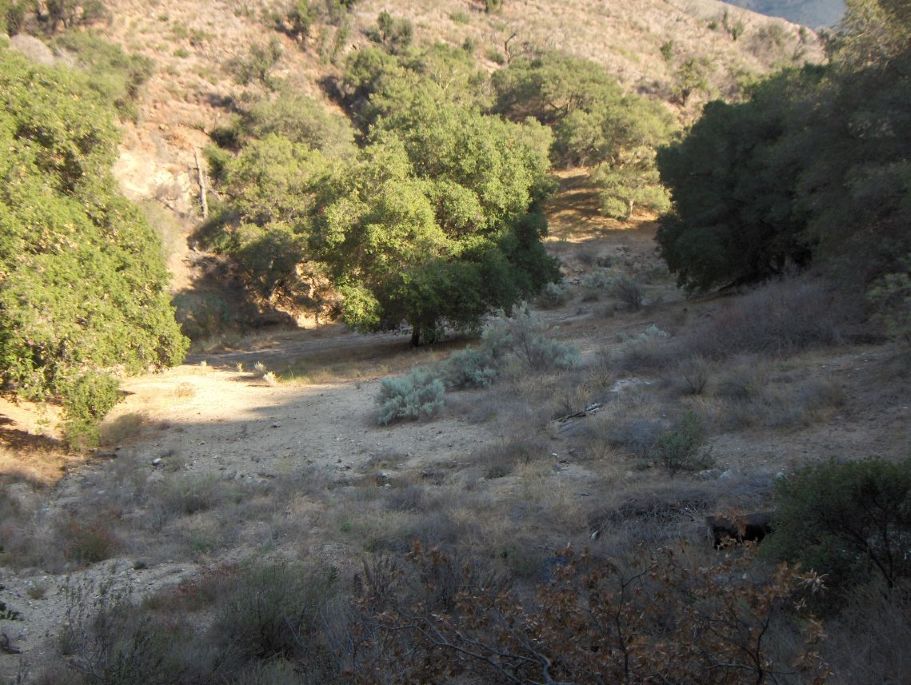
Here is a different angle of the previous photo. (10/13/2007)
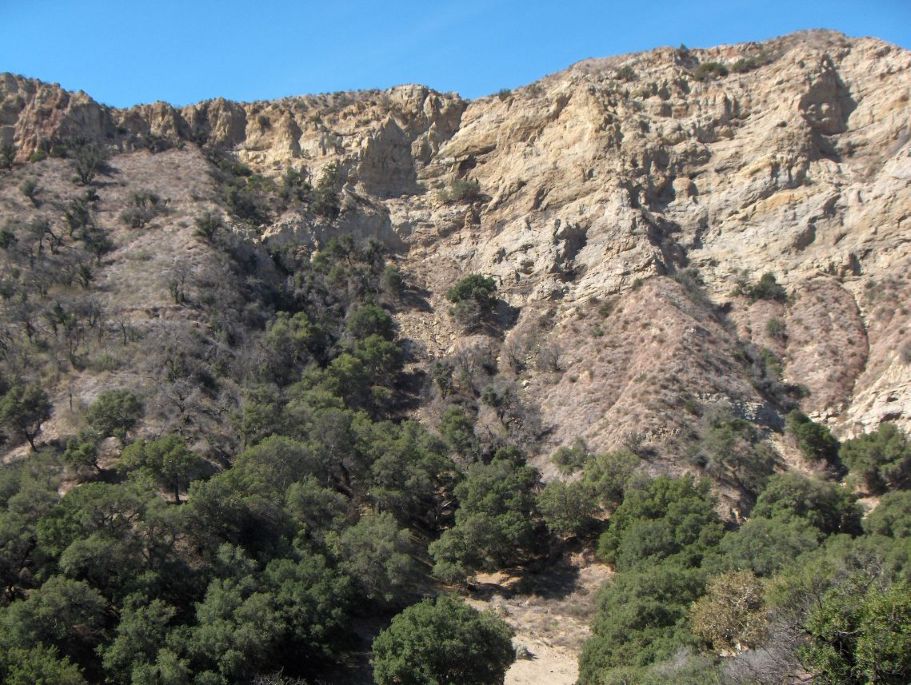
The cliffs are more visible south of the jackplant area. (10/20/2007)
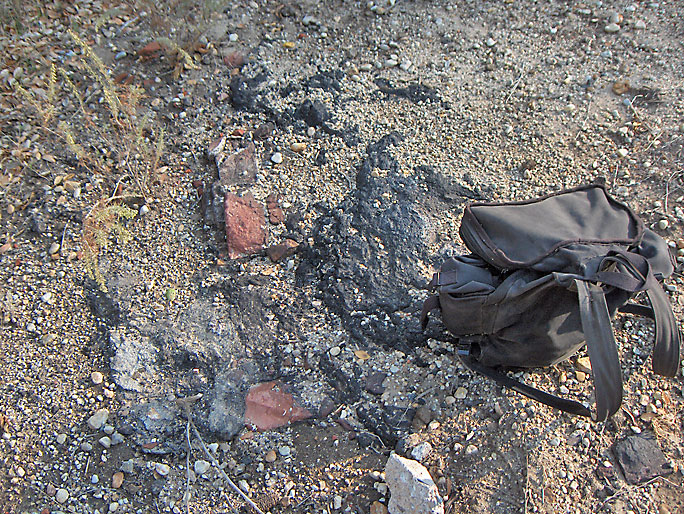
In the area where I suspect the jack plant was, are these bricks embedded in the ground. The jack plant would have been powered by a steam engine probably laying on a brick base, which this might have been part of. (10/13/2007)
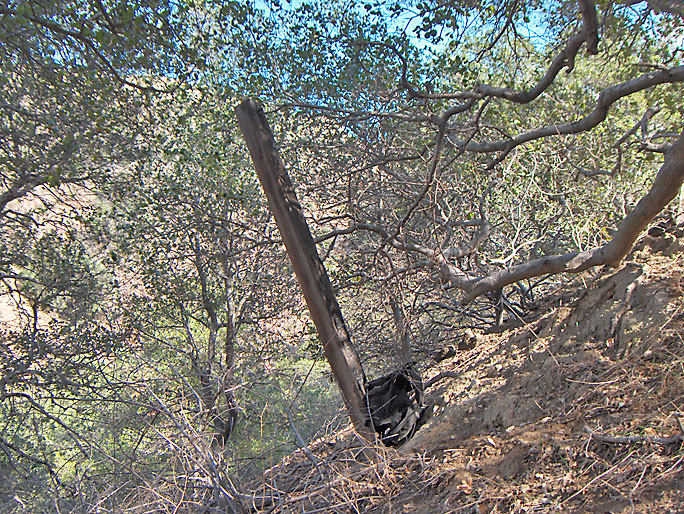
Just below the Elsmere 5 site is this tall wooden post. This would have been a support for the jackline. (10/13/2007)
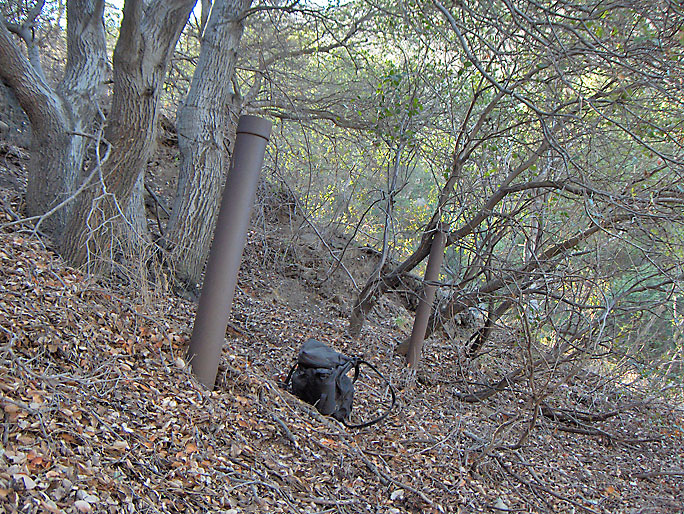
In a straight line about 50 feet below the wooden post are these pipes that could easily have been used to support a jackline. Below these pipes is the open area where the plant would have been located. (10/13/2007)
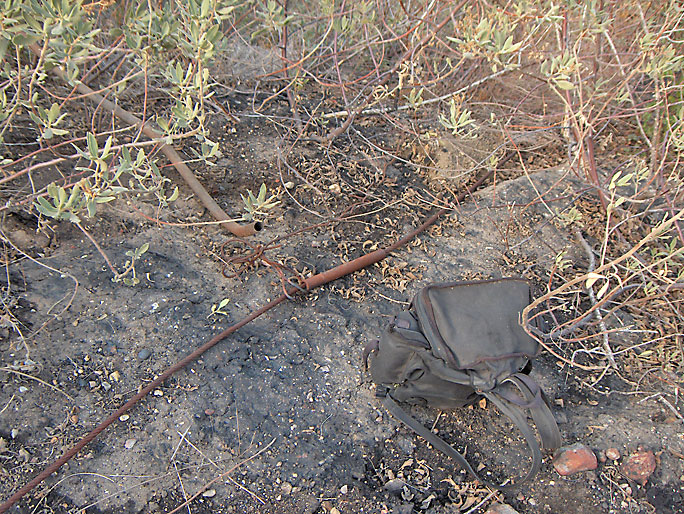
Below Elsmere 9 is this area about 20x20 feet covered with petroleum. There is also this jackline with splice and a pipe laying on the ground. The actual jackline support structure could have been a wooden post that has long since burned away. (10/13/2007)
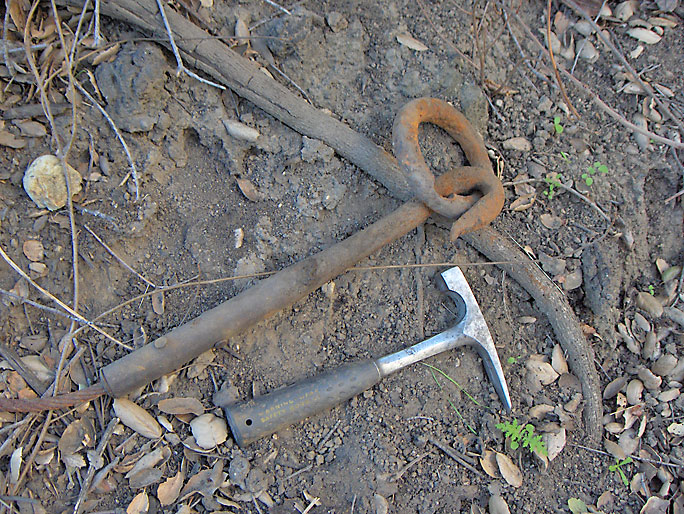
Farther down from the above picture is the end of the jackline with a hook and metal ring. The ring would connect to another jackline that would travel towards the jack plant. (10/20/2007)
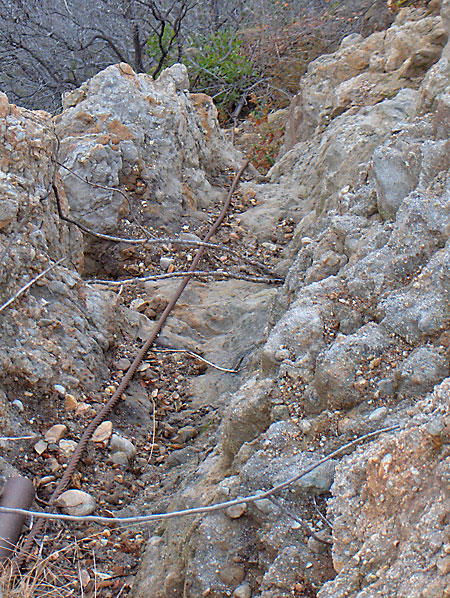
Looking down (north) from Elsmere 18 is this jackline that seems to be laying in a man-made notch cut in the side of a steep cliff to the left that you can't see in the picture. There are also a couple of loose pipes in the notch. Elsmere 18 is high up the east ridge above Elsmere 9 which is above Elsmere 5. Old roads go to all three sites. (10/13/2007)
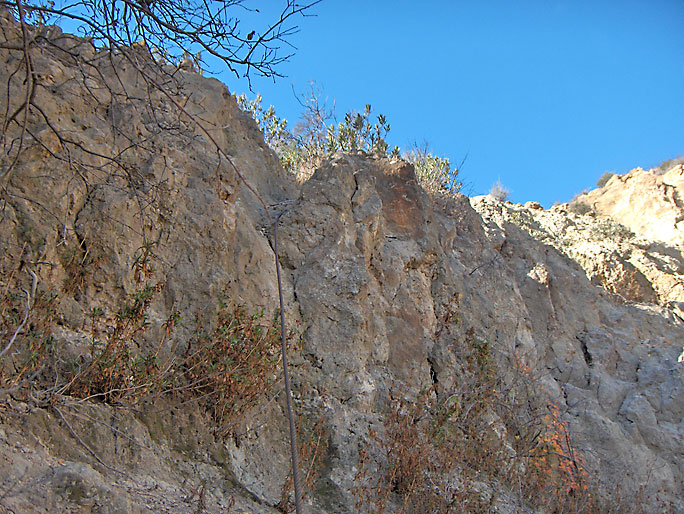
After some difficult climbing, I reached the end of the notch with the jackline heading down the side of the canyon. The canyon is quite steep in this area. (10/20/2007)
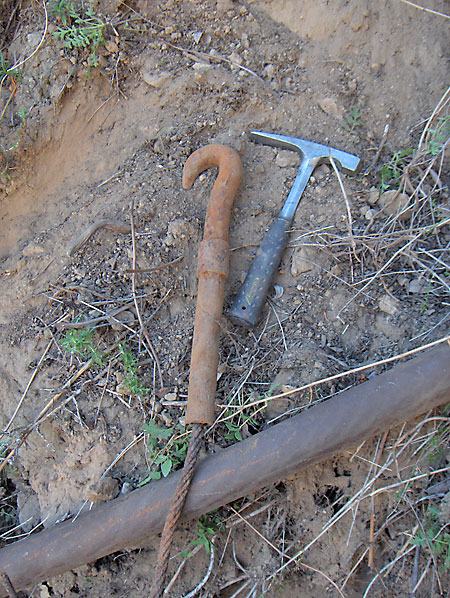
Near, and below, the above picture is the end of the jackline with a hook on it. There is also about a 20 foot long piece of pipe laying close by. (10/20/2007)
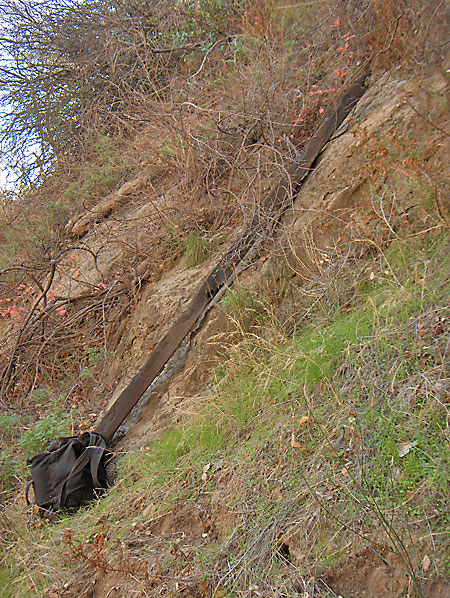
About 50 feet directly below the above picture is this 10 foot long wooden post that had obviously fallen from above. You can see the steepness of the canyon here. The post must have been part of a support structure for the jackline. There is a lot of a poison oak around here. (10/20/2007)
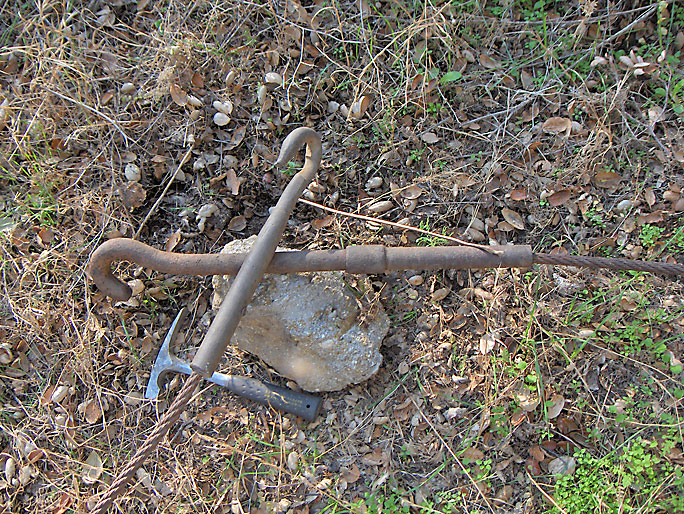
Near the mouth of the ravine, above the jack plant site, I found these two separate jacklines with hooks on their ends. These lines could have come from either Elsmere 6, 9, and/or 18. (10/20/2007)
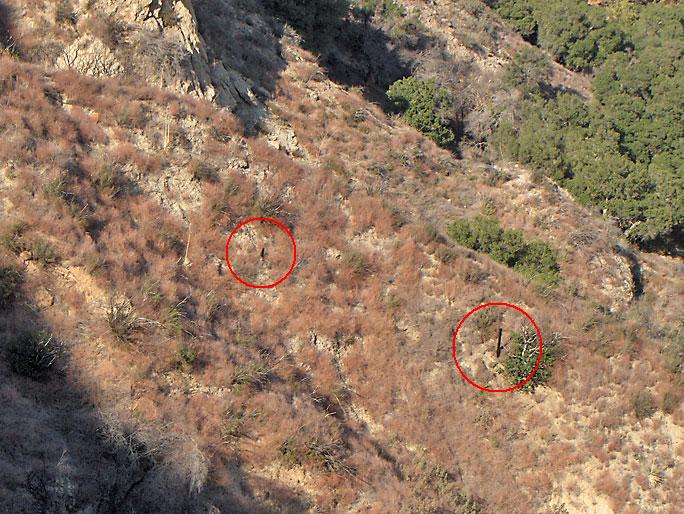
On the west ridge there are 4 wooden posts (or what's left of them). This picture was taken from the east ridge showing two of them. These posts would have been used to support a jackline. (10/13/2007)
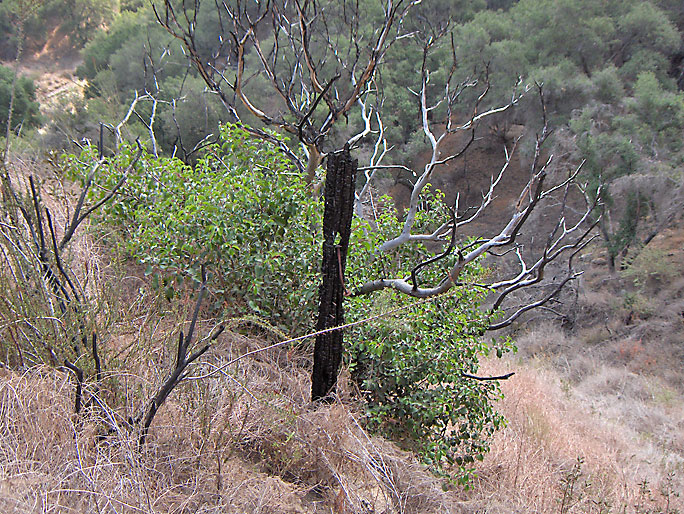
Here is the taller post from the above picture. An old bolt is all that is left of any hardware. (9/29/2007)
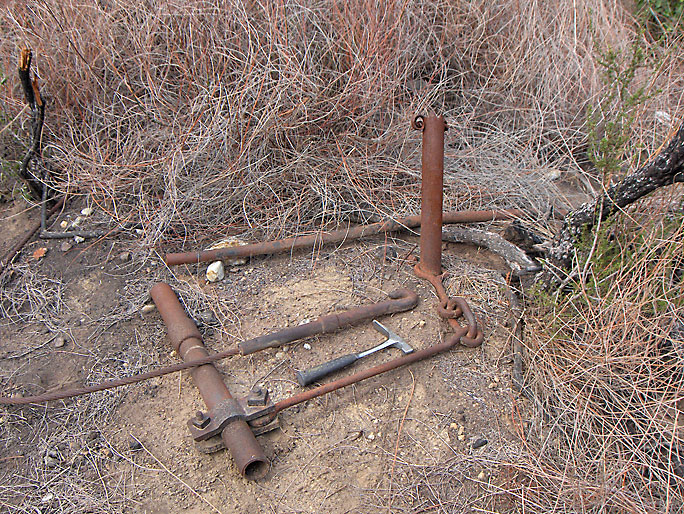
Above the shorter post in the above picture, near the base of the cliff to the top of the canyon, lies this hardware, including a jackline with a hook on the end. (9/29/2007)
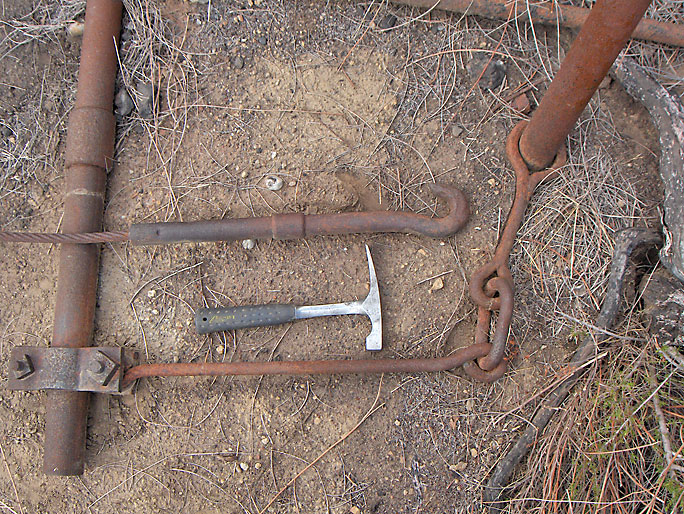
Here is a close up of the above hardware. I don't know how it all went together. (9/29/2007)
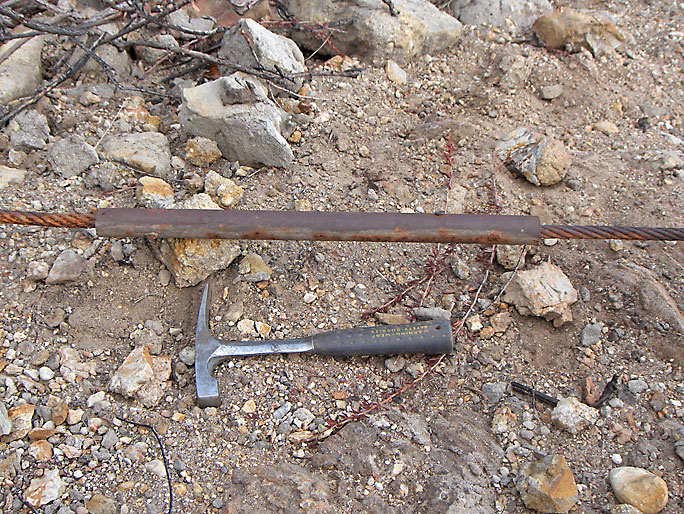
If you follow the jackline closer to the cliff face, you come to this splice. (9/29/2007)
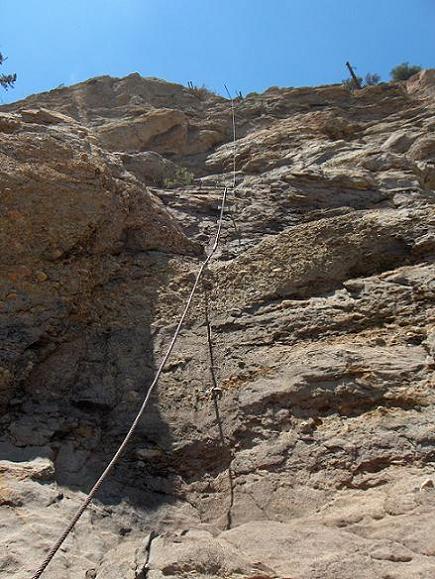
Looking up the face of the cliff you can see the same jackline. Near the top you can just make out some supports. On top of the cliff is the site of Elsmere 15, Elsmere 20, with Elsmere 10 nearby. At first it seemed to me that there was a jack plant at the top of the cliff but which wells would it have powered? There were no wells on the west ridge line from the top of the cliff to the bottom of the canyon so why would there be a jackline there? After locating the evidence near the other well sites it seemed probable that the plant was at the bottom powering at least one well at the top (either 15, 20, or 10). However, that would have been an awful long jackline, so there is certainly some doubt in my mind about that conclusion. (7/21/2007)
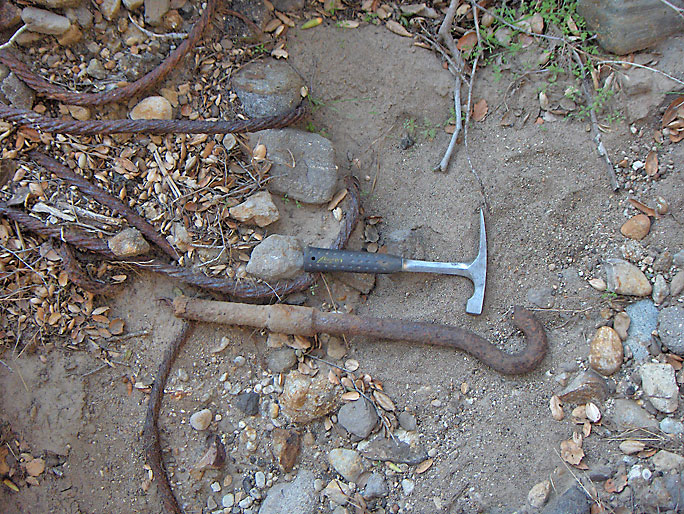
Here is a jackline hook just below the site of Elsmere 7 showing that it too was at one time pumped using a jackline. (10/20/2007)
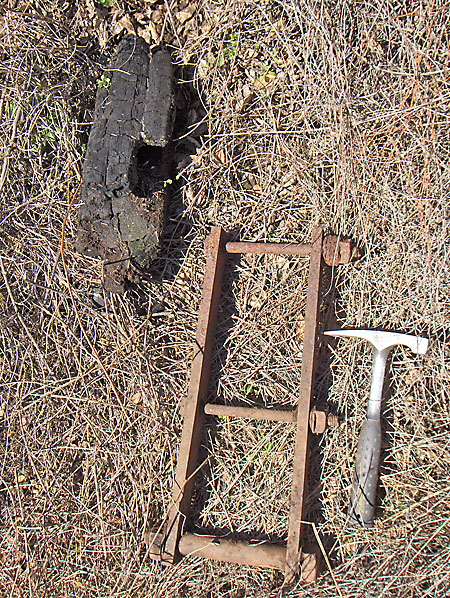
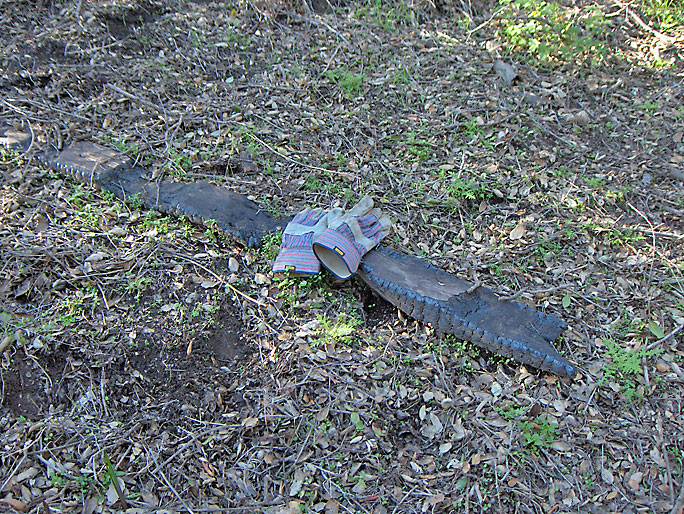
Here is a burned up post with hardware close to Elsmere 13 in the direction of Elsmere 5. This would appear to be part of a jackline support structure. Elsmere 16 is up from Elsmere 13. (1/1/2008)
Here is a another burned up post between Elsmere 13 closer to Elsmere 5. This would also appear to be part of a jackline support structure. (1/1/2008)
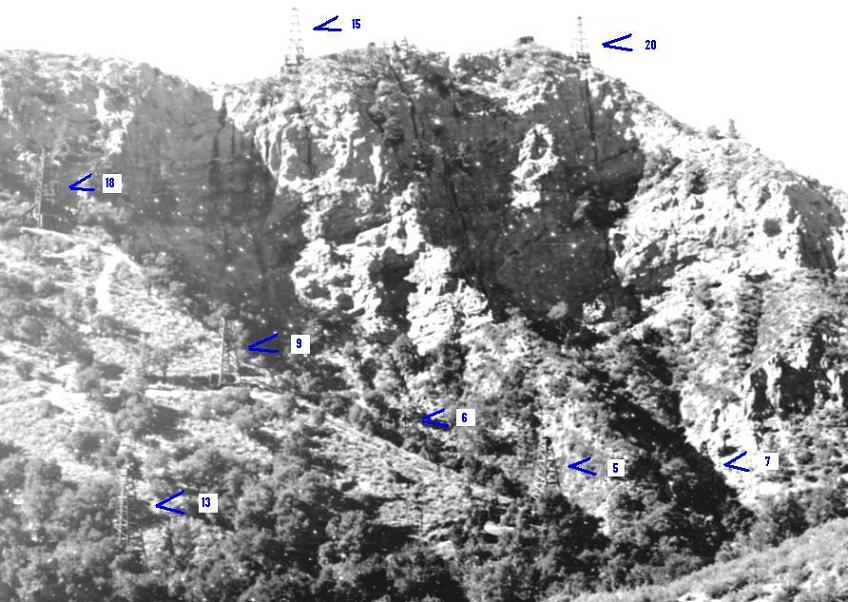
Here is the area in 1905 from Arnold's photograph. It shows most of the west ridge but the wrong side of the east ridge. Considering the photo was taken over 100 years ago, it's pretty amazing that so much detail can be seen when it is blown up. All the derricks in the photo are numbered (Elsmere 5, Elsmere 6, etc.)
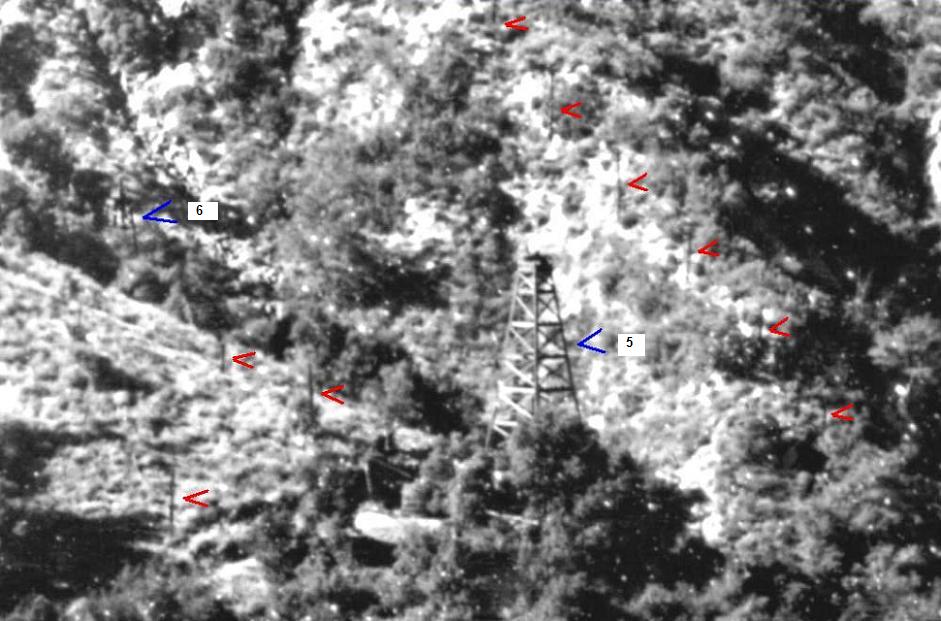
Here is the bottom part of the photo blown up. There appears to be a set of jackline support poles (red arrows) running up the west ridge. Two of these posts match the position of the two burned up posts from previous photos. There also seems to be some supports on the east ridge. There also appears to be a post between Elsmere 5 and Elsmere 13 (out of the picture to the left). The two derricks visible are marked with blue arrows.
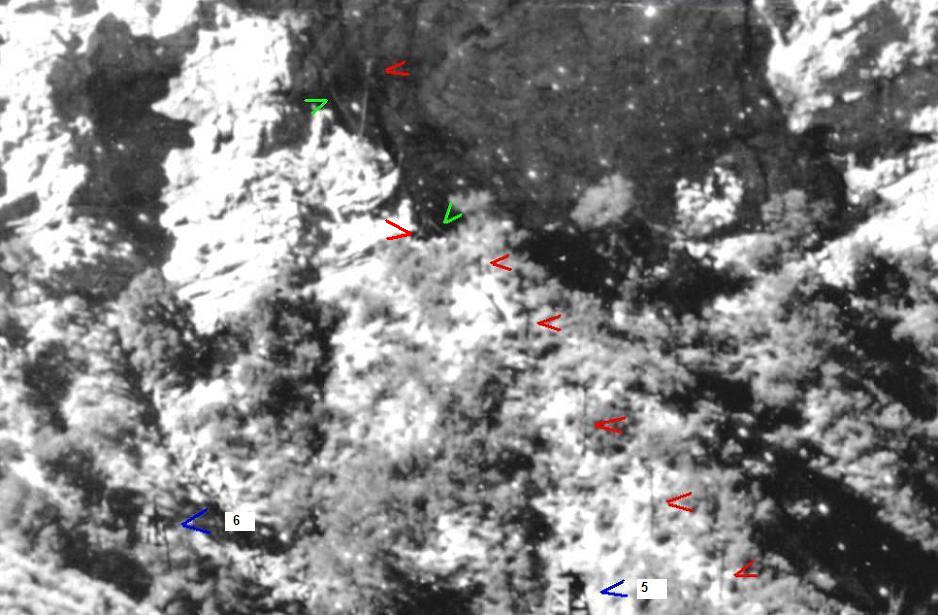
Here is the middle part of the photo blown up. Besides the posts there also appears to be jacklines at the bottom of the cliff (green arrows).
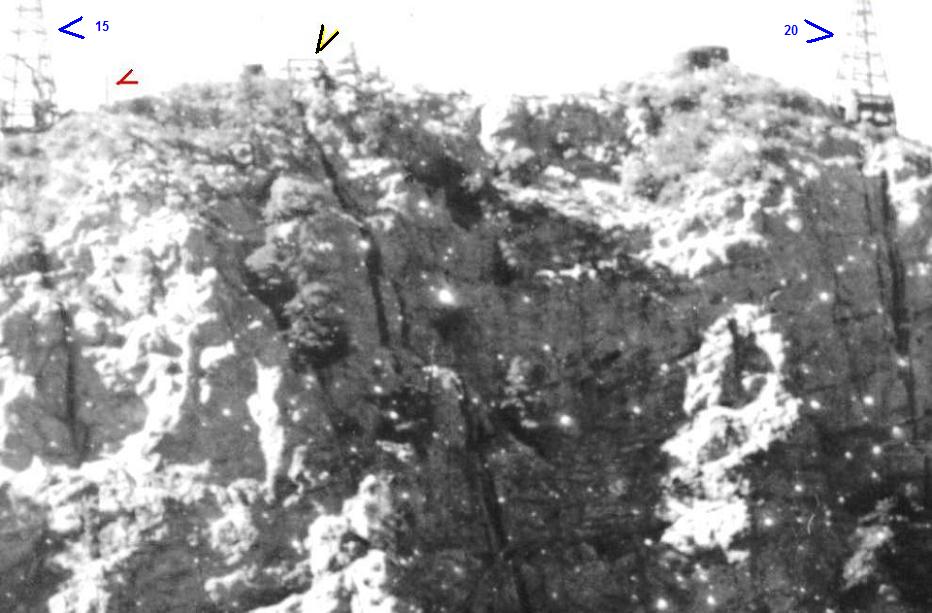
Here is the top part of the photo blown up showing Elsmere 15 on the left and Elsmere 20 on the right. Elsmere 10 would be out of the photo behind 15. The structure with the black arrow is where the cable(s) from the bottom would have come up to. If you look down from that position today you can still a support structure about 50 feet down the cliff face. I can also see what may be a post between this structure and Elsmere 15, although I can't be certain.
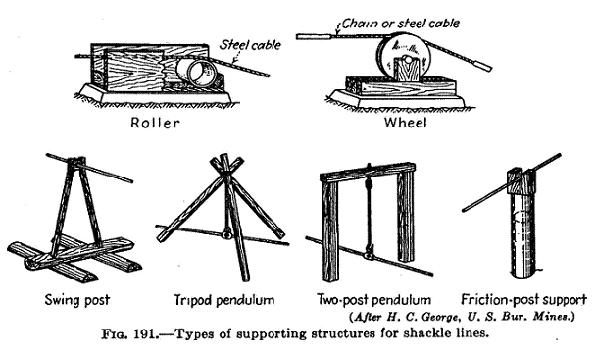
The supporting structures for jacklines were varied depending on what the jackline needed to do. Here are some examples from "Surface Machinery and Methods for Oil-Well Pumping" by H.C. George (1925).
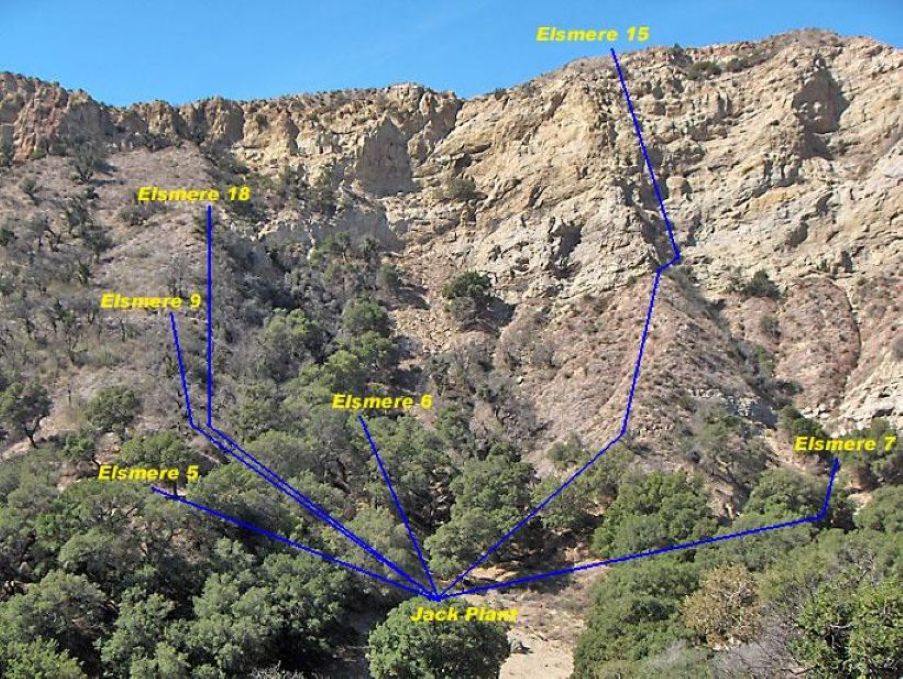
Based on what I found, here is my guess how the whole area could have looked like with the jack plant. Elsmere 2 (not shown on photo) is located across the creek bed out of the picture on the bottom (north). There is no evidence that it was connected to the jack plant, but if it was still active at the time, then it should have been. There is also enough evidence to say that Elsmere 13 or 16 (also not shown) may have been part of this jackline setup. It is also probably that Elsmere 10, 15 and/or 20 were also hooked up to a plant. If correct, this would have been an impressive setup. The pumps at each well must have had counterweights to provide for the downward stroke of the pump and for keeping the jacklines taut, with the centrol power providing the power for the upstroke. (10/20/2007)
The big problem with this setup is that the central power unit would need to be in balance. For every jackline going to a well, there needed to be a counter balance, either another line to a well in the opposite direction or a counterweight. With this setup, there would have had to have been a lot of counterweights to keep the plant balanced. However, not all of the wells were necessarily being pumped at the same time. Some wells could have been shut down and some might have only been occasionally pumped. But counterweights would still have been an issue.